Loading
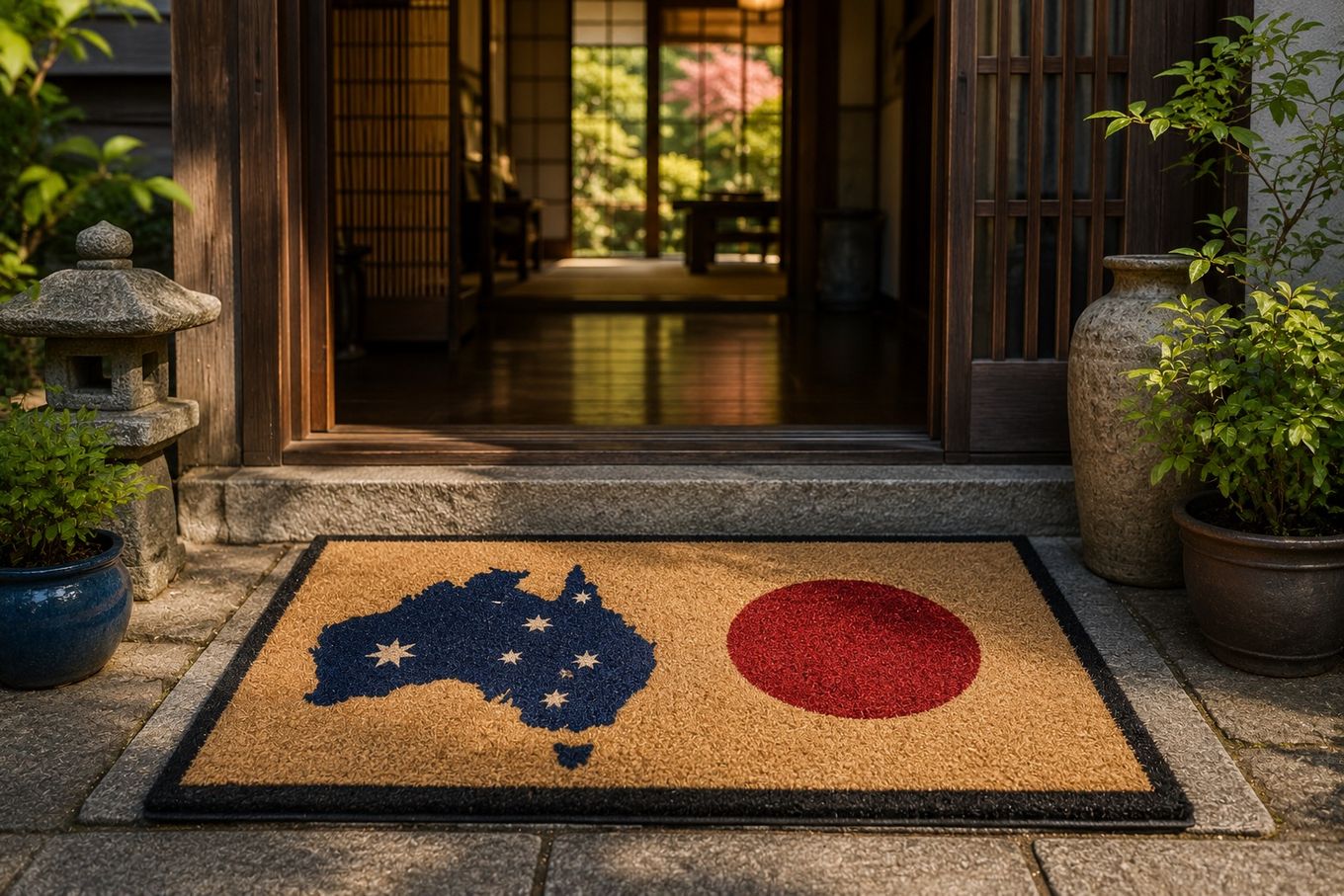
Are You Welcome?
3 June 2026
Are You Actually Welcome?
The surprisingly large economic contribution Aussie second-home owners can make in rural Japan — and why buying cheaper may actually make everyone happier
A lot of Australians quietly ask the same question before buying in regional Japan:
“Do locals actually want us there?”
It’s a fair question, because nobody wants to become that foreigner. You know, the one who arrives full of enthusiasm, accidentally puts burnable rubbish out on the wrong day, disappears for nine months, and leaves the house looking like the opening scene of a low-budget horror film.
That said, in many regional towns across Japan, overseas owners can end up contributing far more to the local economy than they realise. Oddly, one of the biggest reasons this works may be because property prices are still relatively low. It sounds backwards but stay with me.
The A$200,000 Thought Experiment
Let’s take a fairly realistic example. An Australian family buys an older home in regional Japan.
Not a luxury ski chalet with a wine cellar and imported Scandinavian bathtubs. Just a solid older property with character, a few questionable design decisions from 1987, and at least one mysterious switch nobody is brave enough to touch twice.
Total project cost is roughly A$200,000.
Maybe:
- A$100,000 for the purchase
- A$100,000 for renovations using local builders and trades
Now let’s assume they fund this the way many Australians do: by borrowing against equity back home. At current Australian interest rates — say around 6% — the interest alone may already be sitting around A$12,000 per year.
And that’s before:
- council rates
- Japanese property taxes
- insurance
- flights
- internet
- utilities
- maintenance
- snow clearing
- repairs
- the inevitable “why is this leaking?” moment
In reality, ownership could easily cost A$20,000–30,000 a year before anything dramatic happens, which is precisely why entry price matters so much.
Because This Isn’t Really an Investment Property
This is where many Australians accidentally apply Australian property logic to Japan.
Back home, we’ve all been culturally conditioned to believe property should:
- rise forever,
- make us rich eventually,
- and preferably fund retirement while we argue about negative gearing at a barbecue.
Rural Japan often works differently. For many overseas buyers, these homes are not speculative investments, they’re lifestyle assets and that changes everything. Because an A$200,000 project feels very different psychologically compared to an A$800,000 project.
At A$200k, the yearly carrying costs might feel manageable for a lot of upper-middle-income Australian households. You can enjoy the property without feeling like it constantly needs to “perform.”
But at A$800k? Now the place needs to justify itself. Suddenly every empty weekend feels financially offensive. Owners start obsessing over occupancy rates, nightly pricing, cleaning costs, algorithms, and whether a couple from Brisbane really needed to use every towel in the house during a two-night stay. The dream quietly turns into work and occasionally spreadsheets. Nobody buys a peaceful mountain house in Japan because they’re passionate about spreadsheets.
The Hidden Advantage of “Cheap”
Ironically, lower entry pricing may actually be what makes regional Japan sustainable for overseas owners. Because lower financial pressure tends to create better behaviour.
Owners who aren’t heavily stressed financially are more likely to:
- visit regularly,
- spend money locally,
- hire local trades,
- maintain the property properly,
- build relationships,
- and treat the town like a second home rather than a short-term cash machine.
Which, unsurprisingly, tends to be exactly what local communities prefer.
So What Does the Town Actually Receive?
Over five years, one Australian family could realistically contribute something like:
- A$70,000+ in local renovation work
- A$50,000 in restaurants, cafés, groceries, lift tickets, petrol, and local spending
- A$10,000+ in maintenance and trades
- several thousand dollars in local taxes and fees
Suddenly you’re looking at more than A$140,000 flowing into a regional economy from a single household. Importantly, much of that money reaches small local businesses directly. Not giant corporations. Not offshore booking platforms.
Think: local builders, snow removal guys, café staff, gardeners, trades, petrol stations, hardware stores, and somebody’s uncle who apparently “knows a bloke” who can fix absolutely anything.
But Money Isn’t Really the Main Thing
Here’s the part many foreigners misunderstand initially. Most regional communities are not sitting around calculating your economic contribution on a whiteboard.
Generally speaking, people care far more about whether you maintain your property, come back consistently, respect the area, and you gradually become a familiar face rather than a temporary transaction. This connects closely to a Japanese concept called 関係人口 (“relationship population”).
It’s a fascinating idea.
You’re not necessarily a tourist. You’re not necessarily a permanent resident either. But you have an ongoing relationship with the town. Honestly, Australians tend to understand this instinctively once they experience it, because many country towns in Australia work similarly. People notice who keeps showing up.
Final Thought
Ironically, the most successful second-home owners in Japan may not be the wealthiest ones.
They’re often simply the people who:
- buy comfortably,
- avoid overleveraging,
- keep expectations realistic,
- and genuinely enjoy returning to the same place year after year.
Because once ownership becomes financially stressful, something shifts. The property stops feeling like freedom, and starts feeling like work. Eventually everybody feels it — including the owner.
Disclaimer: Figures above are simplified illustrative examples only and do not constitute financial, legal, lending, migration, or tax advice. Actual borrowing costs, tax outcomes, ownership expenses, and economic impacts vary significantly depending on personal circumstances, financing structure, exchange rates, municipality, and property condition.
Related


