Loading
About JapanoMa
A home in Japan, not simply another place to stay.
Learn before you buy
01Who we are
The place you keep coming back to
For many Australians, Japan is not a once-in-a-lifetime destination. It is the place they return to whenever time, money and airline availability cooperate. They come back for the snow, the food, the seasons, the culture and that slightly inconvenient feeling that the trip should have lasted another week.
After enough repeat visits, a question often begins to form: instead of booking another temporary stay, could we have a place of our own?
JapanoMa helps Australians answer that question clearly, practically and without pretending that every inexpensive house in Japan is a hidden treasure waiting to be discovered. Some are, while others are inexpensive because the roof, plumbing and access road have quietly formed an alliance against you.
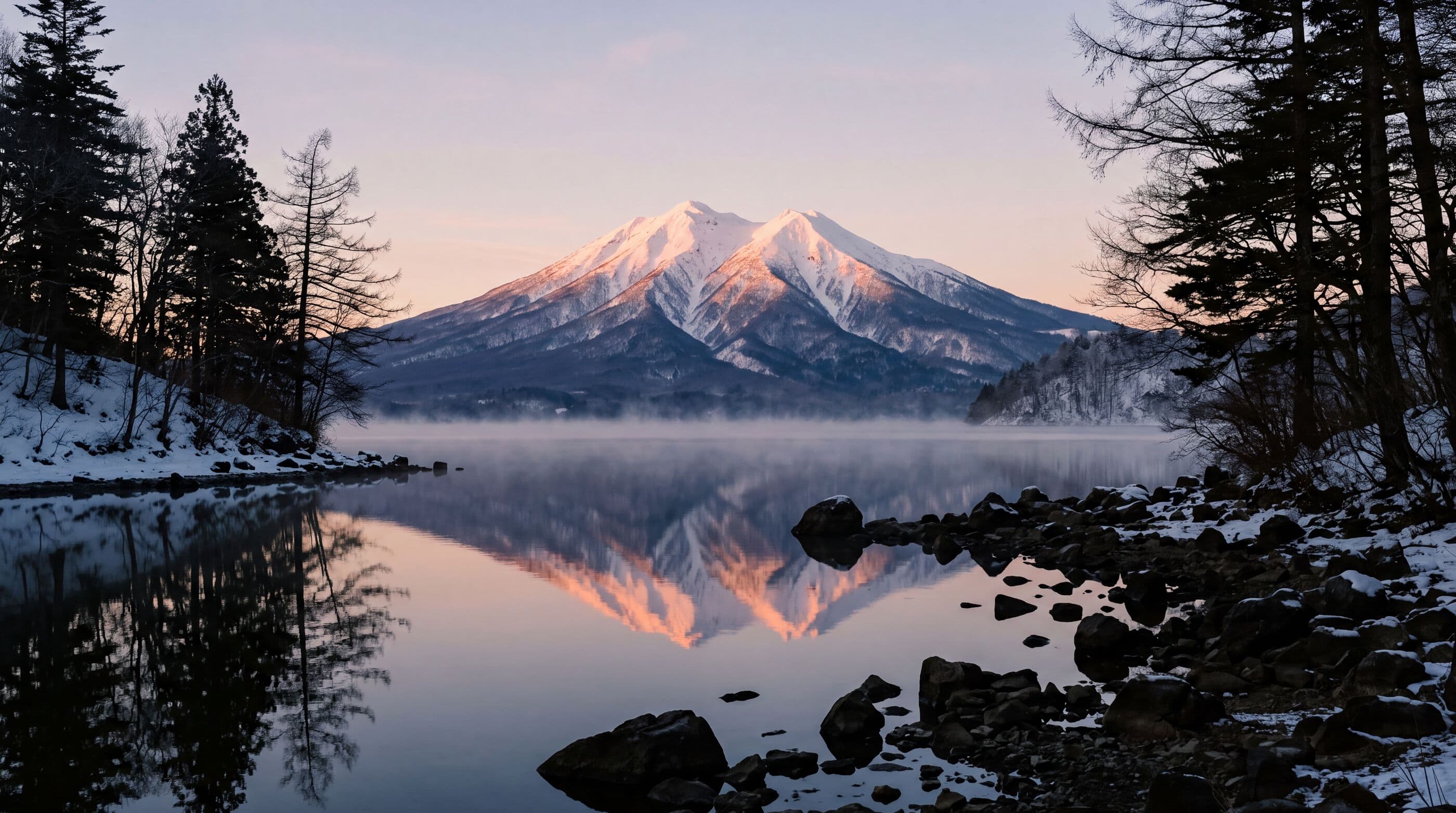
Our focus is regional Japan, particularly the snow-country communities of Northern Japan. We work with ski lovers, repeat travellers, couples and families who want a reliable home base rather than another year of rising accommodation costs, awkward booking windows and uncertainty about where everyone will sleep.
We are not simply here to show Australians properties. We are here to help them decide whether owning one makes sense for their lifestyle, finances and appetite for complexity. Sometimes the right answer will be yes. Sometimes it will be no, or at least not yet. Both are useful answers when they are reached before money changes hands.
02The name
Why the name JapanoMa?
The name JapanoMa was inspired by the Japanese word ochanoma, お茶の間.
お茶の間
ocha means teama refers to a space or a place
Usually translated as "the living room", though that does not quite capture what the word means in Japanese life.
The ochanoma is more than a room containing furniture. It is the heart of a home: the place where people gather, relax, talk, laugh, share food and tea, and spend time together without needing to make an occasion of it.
That is the idea behind JapanoMa. We want to help Australians create a second-home space in Japan where the people they care about can return, reconnect and feel genuinely at home. Not a hotel room they will forget by next winter, but a place that becomes familiar: the same view from the window, the same cupboard containing the good tea, and ideally the same pair of gloves still waiting where they were left.
The name carries another meaning as well.
間Ma門Gate日Sun
The character 間, pronounced ma, contains 門, meaning gate, with 日, meaning sun or day, at its centre. For us, it represents an open gate into Japan and an invitation to find a favourite space on the other side.
JapanoMa is not simply "a home in Japan". It is a welcoming space in Japan: somewhere to enter, settle into and return to.
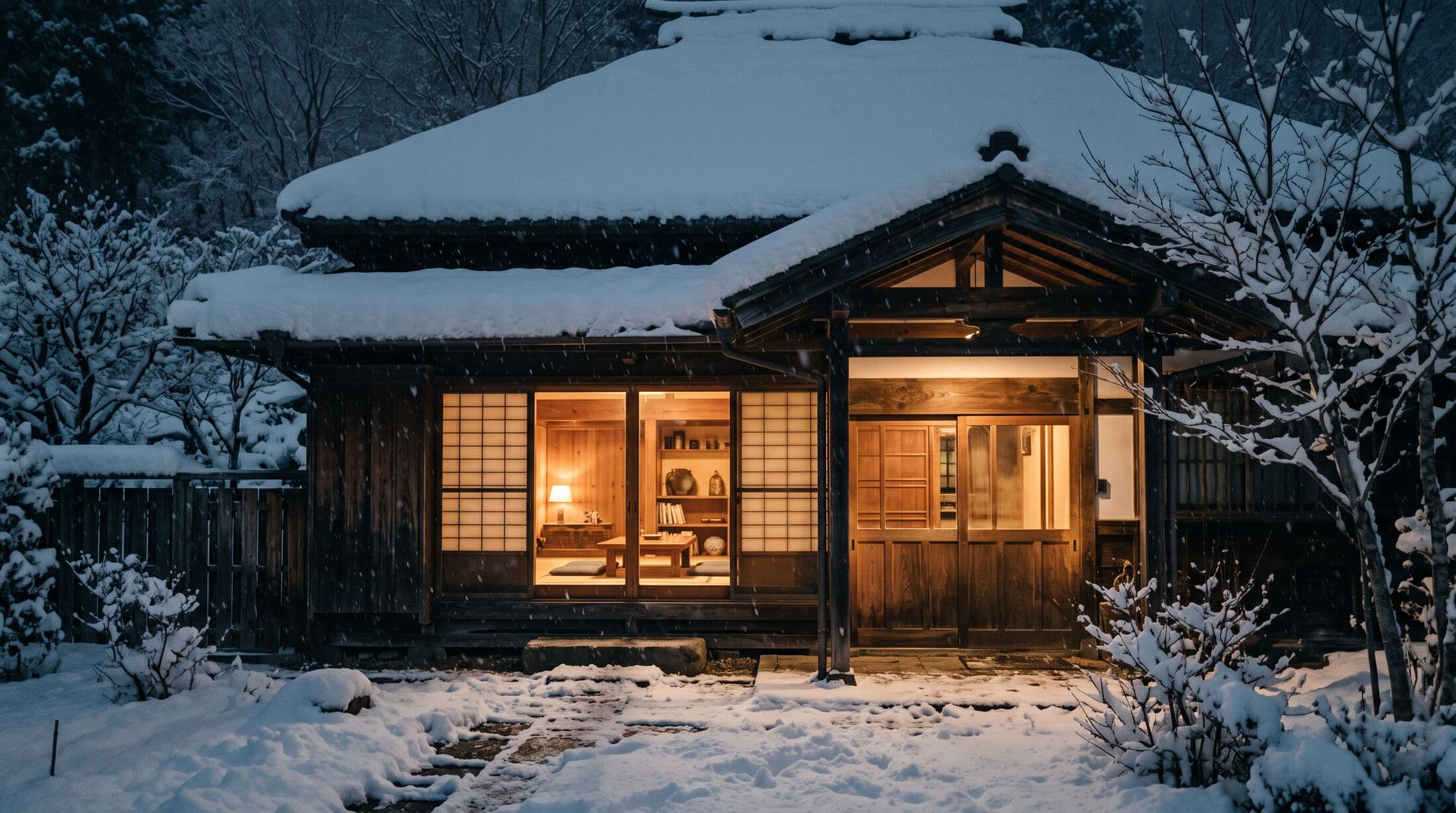
Not a hotel room they will forget by next winter, but a place that becomes familiar: the same view from the window, the same cupboard containing the good tea.
The ochanoma idea
03Why we exist
Worth another life
もったいない
mottainai
the sense that it is regrettable to waste something that still has value and useful life remaining.
Japan is closely associated with the idea of mottainai, and older homes in Japan are often dismissed quickly. In some cases, that caution is completely justified. A low price does not repair structural problems, improve winter access or persuade an elderly heating system to become enthusiastic about January.
However, not every older home is a problem in disguise. Some have been well built, properly maintained or thoughtfully renovated. Chosen carefully, they can become comfortable, practical and deeply rewarding homes again.
Australians often bring a different attitude to older properties. We are accustomed to improving, modernising and adapting homes rather than assuming that age alone makes them obsolete. That perspective can be valuable in Japan, provided it is paired with good inspections, realistic budgets and a willingness to listen to people who understand the local conditions.
JapanoMa exists to help Australians appreciate the right homes, avoid the wrong ones and understand which is which before optimism gets too far ahead of due diligence.
04Our approach
Clarity before commitment
JapanoMa is not a generic foreign-buyer portal, a cheap-akiya hunting site or a brokerage funnel designed to move people from curiosity to contract before they have had time to ask sensible questions. We are an Australia-focused decision-aid platform. That means the process begins with the buyer rather than the listing.
Before discussing which house has the nicest outlook, we want to understand whether ownership fits the way you actually travel:
- How often will you use the property?
- Who will look after it while you are in Australia?
- What will it cost beyond the purchase price?
- How much renovation uncertainty are you willing to accept?
- Would a turn-key home make more sense than a project?
- Will it still feel like a lifestyle improvement when the snow is falling sideways and something needs repairing?
These are not the glamorous questions, but they are often the ones that determine whether ownership becomes a source of pleasure or a surprisingly demanding overseas hobby.
Our promise
Own a Japan home base with clarity, not guesswork. Even when you decide not to buy, you should leave with a clearer understanding of the opportunity, the risks and what would need to change before ownership makes sense.
05The bridge
A bridge between Australia and regional Japan
JapanoMa has been designed specifically for Australians, so the assumptions, examples and concerns are relevant from the beginning. We understand that managing a property from Australia introduces its own set of questions involving distance, language, foreign exchange, maintenance, local relationships and what happens when the owner is several thousand kilometres away.
We also work with a substantial rural Japan partner network, including Katitas. Established in 1978, Katitas has ranked first in Japan’s detached-house purchase-and-resale category for 12 consecutive years.
- 1978
- Established
- No. 1
- 12 consecutive years*
- 152
- Sales locations
- 1,292
- Partner contractors
- 2,857
- Partner agencies
Those numbers matter because regional property ownership is not solved by a website alone. Buyers need local sourcing, practical filtering, renovation capability and people who can actually do things on the ground. A beautiful listing photograph is useful, but it cannot inspect the foundations, clear the snow or answer the telephone when the hot-water system decides it has had enough.
The partner network gives Australians access to local knowledge and execution that would be difficult to assemble independently, particularly in smaller communities where relationships and responsiveness matter.
* Japan’s detached-house purchase-and-resale category, across the Katitas group.
06Our emphasis
Turn-key readiness over bargain hunting
There is no shortage of content about remarkably cheap Japanese houses. The prices attract attention because, compared with Australian property, some barely appear to contain enough zeroes. The purchase price, however, is only the first number that matters.
A very cheap home may need structural work, heating upgrades, plumbing repairs, insulation, snow preparation, pest treatment or months of renovation coordination. None of those things necessarily makes it a bad purchase, but they do make it a different purchase from the one suggested by the headline price.
Our emphasis
The turn-key home
Carefully selected, inspected and renovated. It may cost more initially, but it can substantially reduce the uncertainty, expense and inconvenience that follow. For many Australians, the most practical and lower-stress path to ownership.
For project people
The considered project
Some people enjoy a project. For buyers who want to consider less-ready homes, we may introduce properties not yet fully inspected or renovated, and help connect them with inspection, renovation and local coordination services.
That is why JapanoMa places a strong emphasis on affordable, turn-key-ready homes. The objective is not to find the lowest possible purchase price. It is to find a home that is genuinely workable for the life its owner wants to live.
Neither path is automatically right. Our role is to make the trade-offs visible so buyers can choose deliberately rather than discover halfway through that they bought an adventure when they were hoping for a holiday home.
07After the purchase
The reality of ownership
Buying a home is a transaction. Owning it is an ongoing relationship, and like most relationships it tends to go better when expectations are realistic.
JapanoMa therefore looks beyond the purchase and helps Australians understand the full ownership journey. That includes taxes, insurance, maintenance, renovation risk, winter access, snow clearing, foreign-exchange exposure, local rules, community expectations and the practical arrangements required when the owner is overseas.
A home in Japan should add something meaningful to your life. It should give you familiarity, freedom and a place to return to. It should not quietly transform you into the unpaid manager of a small international property operation you never intended to establish.
This is also why local fit matters. Regional communities are not merely picturesque backdrops for foreign-owned homes. They are places where people live, work, raise families and rely on neighbours. Owners who understand rubbish rules, maintain their properties, clear snow responsibly and take part in the rhythm of the community are far more likely to enjoy a positive experience.
The other half of the decision
Owning in Japan is not only about finding the right house. It is also about becoming the right kind of owner.
08Transparency
How we work and how we are paid
Transparency matters, particularly in property, where commercial relationships can become rather blurry just when the paperwork becomes most complicated.
Japanese property businesses may pay JapanoMa for Australia-focused education, marketing and decision-aid activities. That support helps fund the articles, tools and guidance Australians use to understand the costs, risks and lifestyle implications of ownership before speaking with a licensed property professional.
Australian buyers may also choose to pay for additional services such as inspections, renovation coordination, ownership setup or practical assistance through the purchase and early ownership stages. Those services are optional, offered by third-party providers, and buyers are not required to use our recommended providers if they already have professionals they know and trust.
The principle is straightforward. A Japanese property business may support the education and introduction process, while the buyer pays only for any additional help they choose to receive. We explain those relationships because trust generally improves when everybody knows where the money is coming from and where it is going.
Where Katitas owns and sells one of its renovated properties directly, it acts as the seller of its own inventory. In that structure there may be no separate seller-side broker, although buyers will still have normal purchase-related expenses and may choose additional support services.
JapanoMa is intended to remain education-first and decision-first. We would rather help someone make a well-informed decision slowly than a poorly informed decision with impressive efficiency.
09Drawing the line
What we are not
JapanoMa is not a cheap-akiya bargain site, a Tokyo or Osaka investment-yield marketplace or a hype-driven real estate portal. We are not here to suggest that every Australian skier should immediately buy a house because accommodation prices rose during peak season.
We are also not here to pressure people into buying. A trustworthy platform should be willing to explain when a property is wrong, when the timing is wrong or when ownership itself may not suit the buyer.
Our approach is simple:
decide with confidence.
Deciding before buying is not the traditional order of events on every property website, but we are comfortable with that.
I hope other people can experience the same happiness of feeling genuinely at home in two places.
From the founder
10Founder’s message
An honest and practical bridge
I am Japanese, and Japan will always be my home. I am also proud that Australia has become a second home for my family, and I hope other people can experience the same happiness of feeling genuinely at home in two places. That experience is a large part of why I created JapanoMa.
For many Australians, especially ski lovers and families, the dream is not simply to visit Japan once. It is to return again and again with less friction, greater familiarity and a place that begins to feel like their own. But between the dream and the decision lies a great deal of uncertainty.
Can a home really be managed from Australia? What happens if it has hidden problems? Who looks after it when nobody is there? How difficult is winter access? Will it improve family life, or simply introduce a new collection of bills in another currency? Those questions deserve better answers than sales pressure, optimistic assumptions or an endless scroll of listings.
My perspective is personal as well as commercial. It comes from property ownership experience in both Japan and Australia and from understanding the concerns Australians genuinely have about maintaining a home in another country.
Grounded in deep family experience
JapanoMa is also grounded in deep family experience in Japanese architecture and property. My father is a Japanese First-Class Architect, 一級建築士, a nationally licensed professional qualified to carry out architectural design, construction supervision and related work. During his career, he has designed high-rise buildings, shopping centres, public schools and homes, and he continues to play an advisory role in the business.
Together with our regional partner network, that experience helps us look beyond the romance of ownership and concentrate on what happens after the purchase: maintenance, repairs, snow, language, local coordination and whether the property gives more to its owners than it asks of them.
I am not here to convince anyone to buy. Sometimes the financially sensible, lifestyle-aligned decision is to wait. Sometimes it is to keep renting, enjoy the trip and let somebody else worry about the boiler. A trustworthy platform should be able to say that too.
The goal is larger than a transaction. It is to help Australians make sound decisions about owning in Japan, to help worthwhile older Japanese homes receive another life and to support the regional communities in which those homes stand.
Most of all, JapanoMa is intended to create an honest and practical bridge between Australia and Japan: an open gate through which Australians can enter, explore and find the space they will be happy to call home, and even happier to return to.
Kaz Yasumura
Founder · JapanoMa
Own a Japan home base with clarity, not guesswork.
Decide with confidence