Loading
Visiting Approach
3 June 2026
The Best Place to Ski Niseko Might Not Be Niseko.
For years, the formula for an Australian ski trip to Japan was simple: book Niseko, find powder, eat ramen, repeat. The snow is still fantastic. The problem is that everyone else worked that out too.
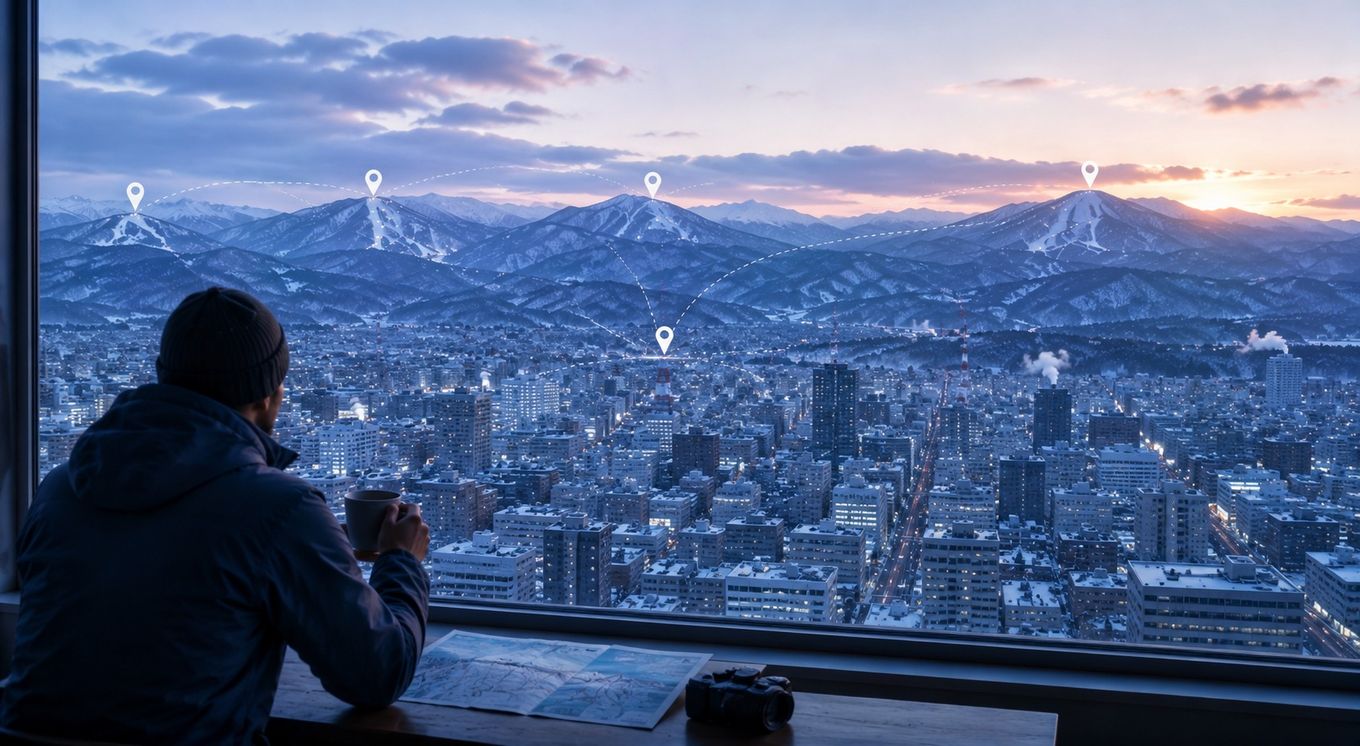
As Niseko has become more expensive, more crowded, and harder to book during peak periods, many repeat visitors are starting to think differently. Instead of building an entire holiday around one resort village, they're basing themselves in Sapporo and skiing whichever mountain looks best on the day. It is a little less like being a destination tourist and a little more like being a local. And for Australians planning their fifth, sixth or tenth Japan trip, that shift can make a lot of sense.
The thing is, Japan hasn't lost its ski magic. It has simply lost some of its effortless accessibility. Peak-season Niseko is no longer something you can assume will be available at the last minute. Hotel occupancy remains high, premium accommodation often books out well in advance, and the famous resorts increasingly carry famous-resort price tags. In other words, Japan is still good value. It just isn't the automatic bargain it once felt like.
Australians already understand this trade-off because we make similar decisions at home. We know the difference between paying for absolute convenience and finding a smarter base that still gets us on snow.
That is where Sapporo enters the conversation. Instead of paying resort-village prices every night, many repeat visitors are choosing to stay in Hokkaido's largest city and ski from there. Resorts such as Teine, Sapporo Kokusai, Bankei and Kiroro are all within practical reach, often less than an hour away.
The appeal is not simply lower accommodation costs. It is flexibility. If one mountain receives better overnight snowfall, you can go there. If visibility looks poor somewhere else, you can change plans. You are no longer locked into skiing a particular resort simply because that's where your hotel booking happens to be.
That's much closer to how many local skiers approach winter. They don’t necessarily commit months in advance to a single mountain. They look at the weather, check conditions, and head where the day looks best. A Sapporo base allows visitors to do something remarkably similar.
The city itself helps too. Compared with a resort village, Sapporo offers a deeper accommodation pool, exceptional food, better non-ski options, and enough city life to make a two-week trip feel easy rather than repetitive. On storm days, there is still plenty to do besides stare out a hotel window refreshing weather apps and negotiating with the ski gods.
None of this makes Niseko a bad choice. Far from it. Niseko still delivers exactly what made it famous: outstanding powder, a genuine mountain atmosphere, and a holiday experience built around snow. But as prices rise, many Australians are beginning to view Niseko the same way they view Thredbo or Perisher. The mountain remains excellent. The question becomes whether staying there every night is the smartest way to access it.
The conversation is slowly moving from "Which resort should we splurge on?" to "What is the smartest base for the winters we want to keep having?"
Japan still offers a dream ski trip. But for Australians who want to return year after year, the smarter play may be to think less like a destination tourist and more like somebody building a winter habit. In many ways, that is the real evolution of Japan skiing. The best trips are no longer necessarily the ones built around a single resort, a premium room, or a once-in-a-lifetime itinerary. They're the ones that are flexible, repeatable, and easy to keep coming back to.
Because ultimately, the best Japan ski trips are no longer the ones you take once. They're the ones you keep finding reasons to take again.
Related


