Loading
Japan Is More
3 June 2026
The Best Thing About Skiing Japan Isn't Always the Skiing
For years, Australians looking for an overseas ski holiday faced a fairly predictable choice: Europe for prestige, North America for scale, or Japan for powder. These days, that calculation is changing. Japan is growing faster than any other major ski destination among Australians because it delivers an unusually hard-to-beat combination of snow, convenience, value, and experiences beyond the ski slopes. The flight is shorter than Europe, the transfers are remarkably efficient, the exchange rate has been kind to Australian wallets, and the holiday still works brilliantly for the family members who would rather soak in an onsen than spend eight hours chasing powder. In short, Japan isn't winning because it has the best skiing. It's winning because it offers one of the best overall winter holidays.
The numbers suggest Australians are increasingly coming to the same conclusion. Visitor arrivals from Australia topped one million for the first time in 2025, while visits to Japan's ski destinations surged during the 2024/25 season. Japan has moved well beyond being a niche powder destination. For many Australians, it is becoming the default answer to a simple question: if we're going overseas for snow, where should we go?
A major reason is accessibility. From Sydney, a direct flight to Tokyo takes a little over ten hours. Once there, Japan's transport system makes reaching ski country surprisingly painless. High-speed rail connects Tokyo to major snow regions quickly, while resort buses handle the final leg. For many Australian families, the journey is refreshingly straightforward: flight, train, bus, snow. Compared with Europe, where the mountains often sit at the end of a much longer travel day, Japan occupies a sweet spot. It feels like a genuine overseas adventure without requiring a recovery holiday afterwards.
The value equation helps too. Nobody has ever accused skiing of being an inexpensive hobby, and the costs have a habit of arriving all at once. Flights, accommodation, lift passes, rentals, lessons, food and transport can quickly turn a ski trip into a serious exercise in budgeting. Japan is not immune to that reality, particularly at its most popular resorts, but favourable exchange rates, efficient infrastructure and a broad range of accommodation options have helped keep the destination attractive for Australians weighing up their alternatives.
That combination of convenience and value is important, but it still does not fully explain Japan's rise. The real advantage is that a ski holiday in Japan is rarely just a ski holiday.
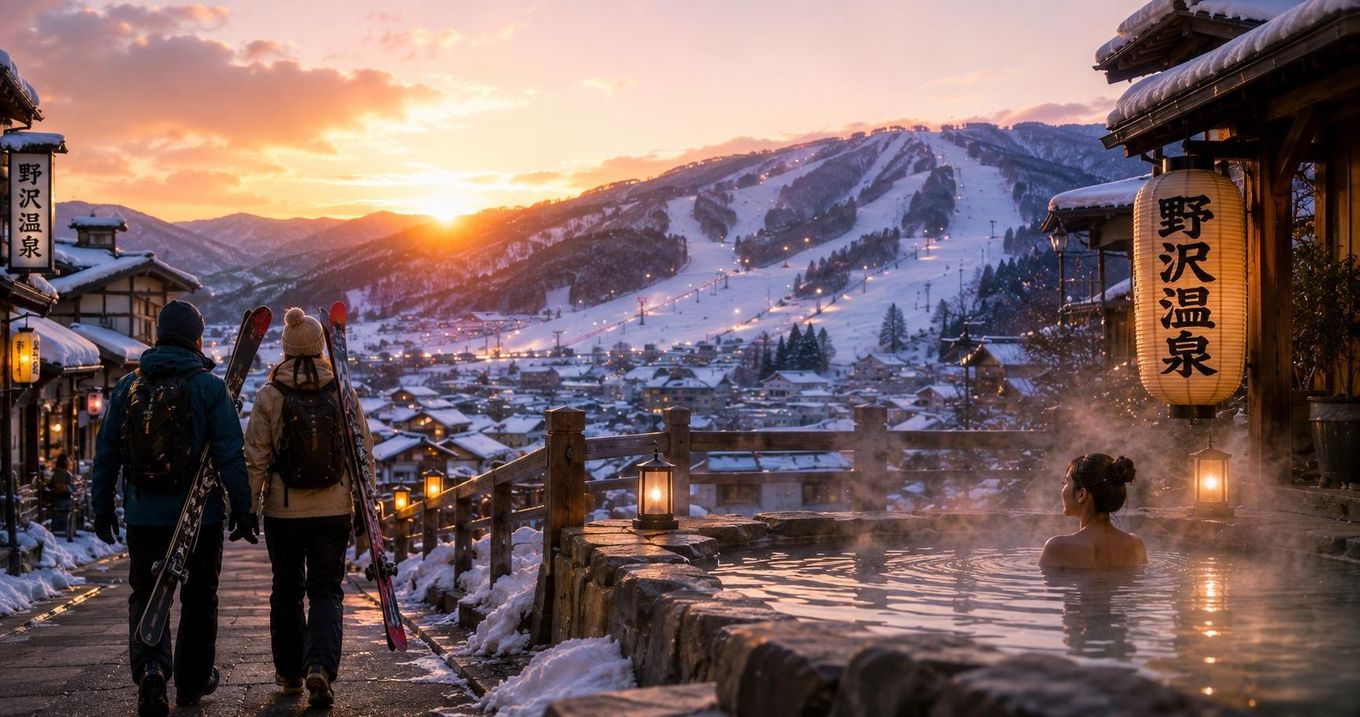
In places like Nozawa Onsen, the mountain is only part of the attraction. The town itself becomes part of the experience: steaming hot springs, traditional inns, winding laneways, small restaurants, local festivals and the sort of atmosphere that encourages aimless wandering. Even people who arrived intending to spend every waking hour on skis often discover that some of their favourite memories happen after the lifts stop spinning.
That matters because not every Australian ski trip is a hard-core ski mission. One parent may ski more than the other. Grandparents might come along. The kids may decide that building snow forts is more exciting than another afternoon on the beginner slope. Japan handles these mixed-use holidays remarkably well because the non-ski hours rarely feel like downtime. They become part of the holiday itself.
A morning on the slopes can be followed by an afternoon in an onsen. A weather day can turn into an excuse to explore local cafés, browse small shops, visit nearby towns or simply settle into a ryokan and watch the snow fall outside. There are not many ski destinations where doing absolutely nothing can feel like a productive use of the day, but Japan has a talent for making that work.
The appeal also extends well beyond winter. Places in Nagano actively promote hiking, mountain biking, river activities and outdoor adventure during the warmer months. Many Japanese mountain towns function as genuine year-round destinations rather than communities that simply wait for the next snowfall.
This helps explain why Japan's growth feels different from many of the world's traditional ski heavyweights. Austria, Switzerland, France and Italy remain iconic destinations and will probably continue to dominate skiing's prestige rankings for years to come. But they are also mature markets. Japan, by contrast, still feels like a destination gathering momentum. International visitor numbers continue to climb, and ski tourism is increasingly being driven by travellers who are discovering that the appeal extends far beyond the snow itself.
For Australians, the reasons are not difficult to understand. Japan is closer than Europe, often easier than North America once total travel time is considered, and currently offers favourable purchasing power. More importantly, it delivers an unusually broad mix of experiences: skiing, food, culture, hot springs, traditional towns, family-friendly travel and genuine four-season appeal. Few destinations package all of those things together quite as effectively.
The Alps may still own much of skiing's historical prestige. But for Australians deciding where to spend their winter holiday budget, Japan increasingly offers the stronger all-round proposition.
Because in the end, the best thing about skiing Japan isn't always the skiing.
Related


