Loading
More Valueable Than Economic Contribution
3 June 2026
What Do Local Communities Value More Than Economic Contribution?
The small everyday things that make Aussies feel less like tourists — and more like locals.
A lot of Australians arrive in regional Japan assuming that if they spend money locally, renovate an old house, support nearby businesses, and generally don’t behave like complete galahs, they’ll naturally become part of the community. To be fair, that certainly helps.
But over time, many overseas owners discover something slightly unexpected. Regional towns often care less about how much money you bring and more about whether you genuinely care about the place itself.
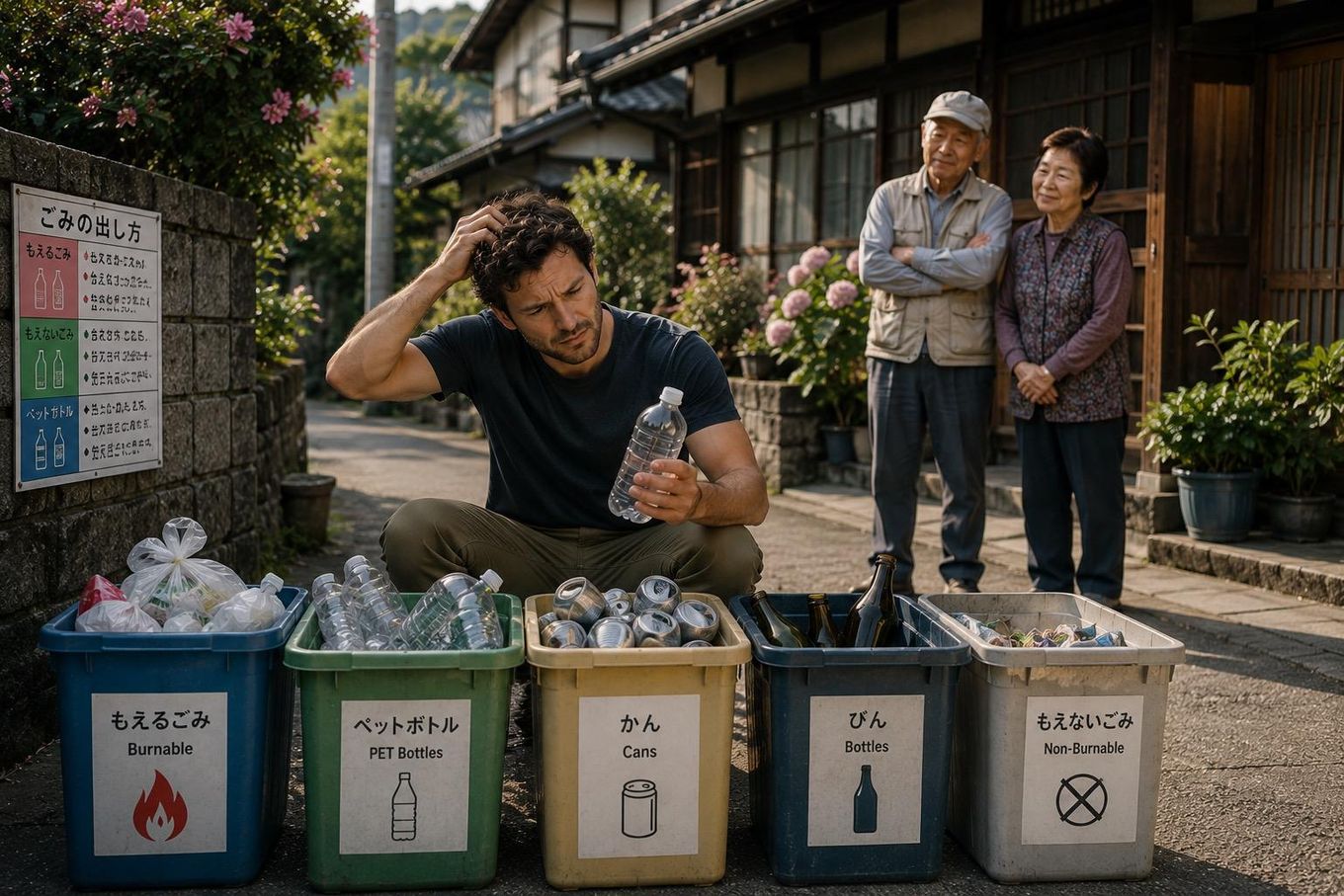
This sounds wonderfully philosophical until you realise the entire question may come down to whether you sorted your rubbish properly on a Tuesday morning.
Ah Yes. The Rubbish Situation.
Nobody puts this in the glossy brochures. You’ll see endless photos of powder snow, cedar forests, steaming onsen, and impossibly peaceful rice fields. What you won’t see is a grown Australian standing in a kitchen at 10:30pm trying to work out whether a yoghurt container lid counts as burnable, recyclable, PET plastic, or a personal moral failing.
In much of regional Japan, rubbish is serious business. Not angry business. Not anti-foreigner business — just highly organised community business. There are often designated bags, collection days, sorting systems, neighbourhood pickup areas, and approximately 47 ways to accidentally embarrass yourself before breakfast. And the thing is, when rubbish is sorted incorrectly, it sometimes becomes somebody else’s problem. A neighbour may quietly fix it. Someone might re-sort it. Nobody necessarily complains directly. Which, somehow, can make Australians feel even worse.
Because now you’re not just confused — you’re confused and mildly ashamed.
Snow Removal Isn’t Really About Snow
One thing many Australian owners eventually realise is that snow clearing in Japan is only partly about snow, and more about reassurance. In snow regions, neighbours quietly notice whether a property appears cared for. If snow piles up for too long, people naturally start wondering: Is someone checking the house? Has the owner disappeared? Will ice damage the roof? Is this place abandoned? Honestly, in towns with ageing populations and shrinking communities, these concerns are not unreasonable. A well-maintained property signals something important: somebody is paying attention.
That’s why good local property managers become worth their weight in gold. Same with reliable snow contractors. When you’re back in Australia sweating through a 34-degree Christmas, people in Japan can see the driveway has been cleared, the paths are safe, and the place still looks loved. That matters more than many foreigners initially realise.
Summer Has Its Own Judgement System
Australians tend to associate Japanese property maintenance with winter. Then summer arrives and the weeds begin their hostile takeover. Grass grows fast in many parts of rural Japan. Gardens become jungles almost overnight. Leaves clog drains. Vines start exploring architectural opportunities. Suddenly your charming holiday home begins looking less “peaceful countryside retreat” and more “abandoned dojo where the third act of a horror film occurs.”
Again, nobody expects perfection, but visibly maintained homes create a very different feeling in a neighbourhood compared to homes that appear forgotten. Interestingly, a lot of overseas owners end up building surprisingly strong local relationships through very ordinary things. Things like hiring local trades, chatting with neighbours, buying plants from the local nursery, or paying someone’s cousin to deal with the grass situation before it becomes visible from space.
None of this feels particularly profound at the time. Collectively, it adds up.
The Unexpected Power of Simply Showing Up
One of the fastest ways to stop feeling like an outsider in regional Japan may also be the simplest: Turn up.
Local festivals are a perfect example. You don’t need to become Japanese. Nobody expects you to suddenly become Japanese or start wandering around in a yukata shouting festival chants after three weekends in town. That said, showing a genuine interest goes a surprisingly long way. Sometimes it’s helping set up lanterns. Sometimes it’s carrying tables. Sometimes it’s just standing around asking questions while trying not to look completely confused.
Aussies are often quite good at this part. We’re culturally wired for casual participation. We’ll volunteer for almost anything if somebody hands us a drink and points vaguely toward a task. Over time, many owners discover these events become the moments they remember most. Not because they felt like tourists, but because they didn’t.
The Real Secret Is Usually a Local Support Network
The overseas owners who seem happiest long term are rarely the ones trying to manage everything remotely from Australia. Instead they’ve built a small ecosystem around the property. They found a trusted property manager, a local with a sturdy snow shovel, a gardener, reliable tradies, neighbours with useful local knowledge, and a favourite local cafe where staff no longer look alarmed when they walk in!
Operationally, this makes life easier, and emotionally, it changes everything. Eventually the property stops feeling like “the foreign-owned house up the hill”, and starts feeling more like, “Oh yes, that place. Good people.”
Final Thought
Most regional communities in Japan are not expecting perfection from overseas owners but they do notice effort. Not surprisingly, in many towns facing population decline, ageing demographics, and shrinking local participation, effort carries real weight.
Sometimes more than money does which means something as ordinary as cutting grass, clearing snow, sorting rubbish properly, or helping out at a local festival can quietly say, “We care about this place too.” Oddly enough, that may be the thing people remember most.
Disclaimer: This article discusses broad cultural and operational themes commonly observed in regional communities and is not intended to stereotype any nationality, town, or individual experience.
Related


